
 The UNEP-Global Footprint Network report, entitled ERISC Phase II: How food prices link environmental constraints to sovereign credit risk, features a table that ranks countries according to how badly they will be affected if global food commodity prices double.
In the future, the world will likely suffer from higher and more volatile food prices as a result of a growing imbalance between the supply and demand of food, the report notes. Rising populations and incomes will intensify the demand for food while climate change and resource scarcity will disrupt food production.
The report, which was published in collaboration with Cambridge Econometrics and several leading financial institutions, models the impact of a global food price shock on 110 countries to assess which countries face the greatest economic risk from this growing imbalance.
In terms of the highest percentage loss to GDP, the five countries that will be worst hit if food commodity prices double are all in Africa – Benin, Nigeria, Cote d’Ivoire, Senegal and Ghana. But China will see the most amount of money wiped from its GDP of any country – $161 billion, equivalent to the total GDP of New Zealand. India will see the second highest loss to GDP – $49 billion, equivalent to the total GDP of Croatia.
Among the report’s other key findings are:
- Overall, Egypt, Morocco and Philippines could suffer the most from a doubling of food prices in terms of the combined impact on GDP, current account balance and inflation.
- 17 out of the 20 countries most at risk from a food price shock are in Africa.
- Paraguay, Uruguay, Brazil, Australia, Canada and the US would benefit the most from a sharp increase in food commodity prices.
- Globally, negative effects of a food price shock massively outweigh positive effects in absolute terms. While China could see an absolute reduction in GDP of $161 billion, the highest absolute positive effect on GDP, seen in the United States, is only $3 billion –50 times smaller than the impact on China.
- In 23 countries, a doubling in food prices leads to a 10 per cent (or more) rise in the consumer price index.
- Countries with higher sovereign credit ratings tend to be less exposed to risks resulting from a food price spike.
- Countries whose populations have the highest consumption of natural resources and services, and are therefore most responsible for the environmental constraints that make future food prices higher and more volatile, tend to face the lowest risk exposure.
The report builds on the first Environment Risk Integration in Sovereign Credit (ERISC) report published in 2012 by UNEP FI and GFN.
The overall objective of the ERISC project is to assesses how environmental risks such as deforestation, climate change and water scarcity affect economies, given that GDP, inflation and current account balances underpin some of the criteria that determine a country’s sovereign credit rating and the cost of borrowing on international capital markets.
 Essen ist in vielerlei Hinsicht politisch. Salem El-Mogaddedi hat dieser Idee einen weiteren wesentlichen Aspekt hinzugefügt, als er 2015 gemeinsam mit Gernot Würtenberger
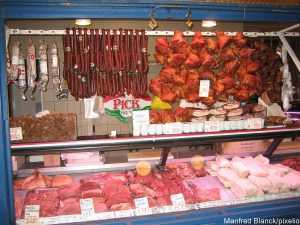 In Dänemark empfahl die Ethik-Kommission Ende April die Einführung einer Steuer auf rotes Fleisch. Dies könne die Treibhausgasemissionen um 20 bis 35% reduzieren. Die Erwägung der Steuer ist damit auch eine Konsequenz der Klimakonferenz von Paris COP 21 Ende vergangenen Jahres. Die Einführung einer solchen Steuer zielt auf die Reduktion des Fleischkonsums ab ähnlich wie Tabak- und Alkoholsteuer.
 In einer kleinen hübschen Stadt in Südfrankreich werden große Pläne geschmiedet: Bis 2020 möchte die Stadtverwaltung von Albi mit Bürgermeisterin Stéphanie Guiraud-Chaumeil die Selbstversorgung mit Lebensmitteln für den gesamten Ort umsetzen. Die 50.000 EinwohnerInnen des Département Tarn sollen mit Hilfe von urbaner Landwirtschaft im Umkreis von bis zu 60km, Gemeinschaftsgärten und kurzen Lieferwegen selbstsuffizient ernährt werden.
 [
[
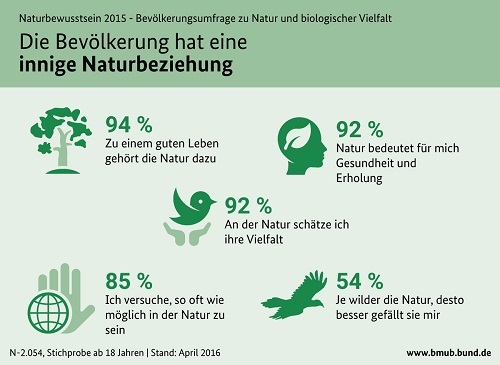
 Eine große Mehrheit der Deutschen wünscht sich strengere Regeln und Gesetze für die Landwirtschaft. Landwirte sollen mehr Rücksicht auf Natur und Tierwohl nehmen. Den Einsatz von Genpflanzen lehnen die Deutschen klar ab. Das sind einige Ergebnisse der neuen
 Auch in Hamburg befindet sich ein Ernährungsrat mitten in den Vorbereitungen zur Gründung. So findet beispielsweise am 02. Mai 2016 ein Brainstorming-Treffen statt. Dort wird über die grundlegende Struktur und Ausrichtung eines Ernährungsrates für Hamburg gesprochen, u. a. über Organisation, Zielsetzung und mögliche Projekte.
 Seit gestern ist vom großen #TTIPleak die Rede: Greenpeace übergab am 01. Mai Abschriften der bisher verhandelten 13 Vertragskapitel der Süddeutschen Zeitung, dem NDR und WDR. Dies entspricht rund der Hälfte des gesamten Abkommens. Darin finden sich u. a. Forderungen der USA nach erheblichen Zugeständnissen beim Agrarexport (Stichwort: Genfood). Außerdem möchten die USA das europäische Vorsorgeprinzip zugunsten des sogenannten Wissenschaftsprinzips schwächen. (Schon jetzt ein wesentliches Argument der Glyphosat-Debatte.) Das Wissenschaftprinzip „besagt, dass ein Produkt so lange als sicher gilt, bis das Gegenteil bewiesen ist. Europa dagegen orientiert sich am Vorsorgeprinzip. Es kann schon ein Risikoverdacht reichen, um Verbote auszusprechen.“ (
 Die
Die