Wie wirkungsvoll ist klimasmarte Landwirtschaft?

Wie wirkungsvoll ist klimasmarte Landwirtschaft?

Helfen agrartechnologische Innovationen gegen Auswirkungen des Klimawandels?

aene gespinst/Flickr

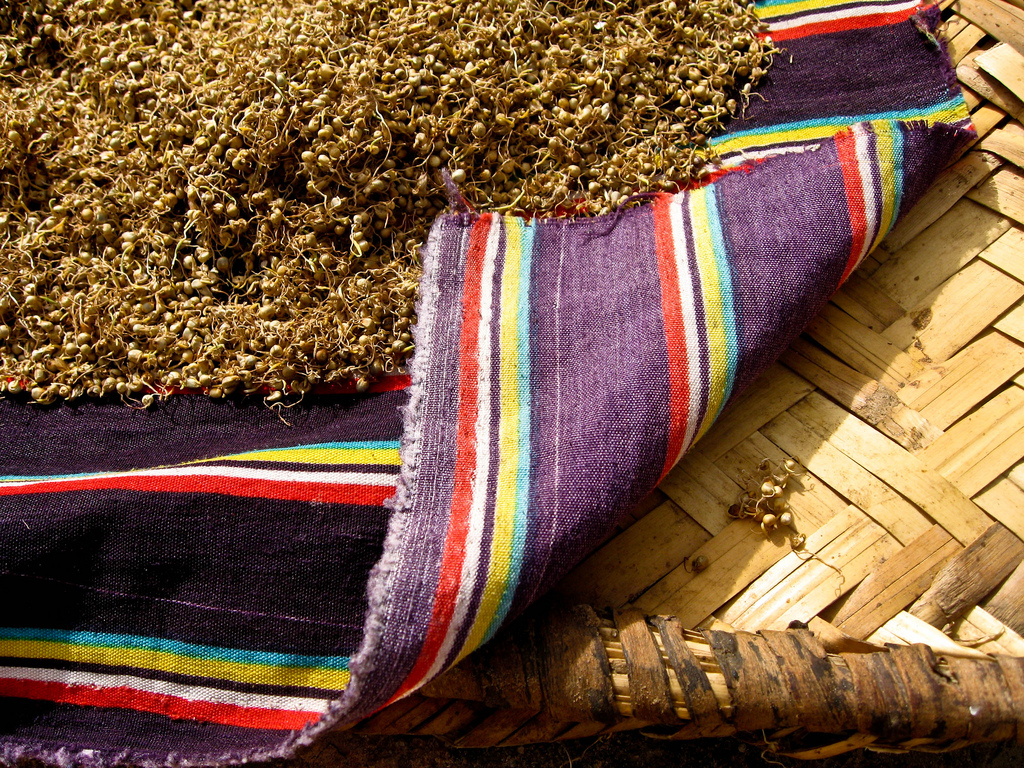
Wie wirkungsvoll und wie sinnvoll ist klimasmarte Landwirtschaft wirklich? Also jene Landwirtschaft, die „smart“ mit technologischen Innovationen die Landwirtschaft gegen die Auswirkungen des Klimawandels wappnen will. „Gegen ausgelaugte Böden, Wassermangel und Extremwetter versuchen Agrarexperten weltweit mit neuen Technologien anzukommen.“ schreibt Susanne Schwarz in der Frankfurter Rundschau und erklärt am Beispiel Äthiopiens die Idee der CSA (Climate Smart Agriculture).

Doch: „Der Anbau der Super-Samen funktioniere oft nur mit teuren chemischen Düngern,“ spätestens nach drei Jahren sei es dann aus mit der guten Ernte und man müsse neue Samen kaufen. „Eine Falle für eine Agrarwirtschaft wie die afrikanische, die zu 85 Prozent von Kleinbauern betrieben wird.“ Zudem werden die vermeintlich klimasmarten Samen von Agrarkonzernen patentiert, während dagegen „Pflanzensorten, die für die global agierenden Konzerne keine Gewinne versprechen, vom Markt verschwinden.“ Sorten, die es braucht für Biodiversität, die wiederum Ökosysteme anpassungsfähiger gegenüber Wetterextreme macht.

Inkota und andere NGOs formulierten bereits im Juni das Postionspapier Klimasmarte Landwirtchaft – nein Danke! Darin heißt es u. a. „CSA fungiert als trojanisches Pferd für die Fortführung der Grünen Revolution, da es vielfach auf input-basierte, technische „Lösungen“ und mehr Ressourceneffizienz reduziert wird.“

Doch in Afrika regt sich Widerstand und Organisationen wie die Alliance for Food Sovereignty in Africa oder regionale Bündnisse wie das kenianische African Biodiversity Network schließen sich zusammen, um ein nachhaltiges Gegenkonzept mit traditionellen Methoden zu stärken.

IWEWie wirkungsvoll ist klimasmarte Landwirtschaft?
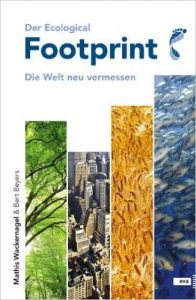
Footprint. Die Welt neu vermessen

Footprint. Die Welt neu vermessen

Die Verfügbarkeit natürlicher Ressourcen persepktivisch einschätzen

Am 08. August ist es leider schon wieder so weit: Der globale Erdüberlastingstag, Earth Overshoot Day für das Jahr 2016  ist erreicht, d. h. die natürlichen Ressourcen für das jahr sind aufgebraucht, alles was wir danach angreifen, geht zu Lasten der Natur und der Zukunft: Wir leben auf Pump.


Wie viel Natur haben wir – wie viel nutzen wir? Auf diese Frage gibt die Footprint-Methode eine wissenschaftlich fundierte Antwort.

Die maßgeblich von Mathis Wackernagel, Präsident des Global Footprint Network in Oakland/Kalifornien und Genf entwickelte Footprint-Methode (oder ökologischer Fußabdruck) ist für die Planung und Risikoabschätzungen von Unternehmern, Investoren, Entwicklungsfachleuten, Stadtplanern und politischen Strategen unverzichtbar.

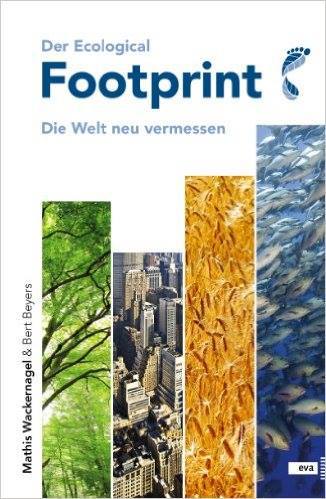
Mathis Wackernagel & Bert Beyers: FOOTPRINT. Die Welt neu vermessen, Neuausgabe 2016 mit aktuellen Zahlen und Kommentaren, Grafiken und Tabellen, 256 Seiten, broschiert, € 19,90 bei der Europäischen Verlagsanstalt. Das Buch kann man zum Beispiel bei Buch7.de bestellen, wo 75% des Gewinns an soziale, kulturelle und ökologische Projekte gespendet werden.

IWEFootprint. Die Welt neu vermessen
Über Saatgut und Macht

Über Saatgut und Macht

DLF-Buchbesprechung "Saatgut" von Anja Banzhaf

Mit einer Buchbesprechung rekonstruiert der Deutschlandfunk den Kontext von Anja Banzhafs Saatgut. Wer die Saat hat, hat das Sagen. Das im Oekom-Verlag erschienene Buch gibt einen verständlichen und gründlichen Einblick, wie die Agrarindustrie versucht weltweit die Kontrolle über die Saat zu übernehmen. Gerade vor dem Hintergund von Kaufverhandlungen zwischen Monsanto und Bayer sowie der Glyphosat-Zulassungsdebatte bekommt das Buch neue Brisanz.

„Konzerne kaufen sich in verschiedene Bereiche entlang der Saatgut-Wertschöpfungskette ein. Insbesondere die Verquickung zwischen Chemie- und Saatgutkonzernen hat sich für diese als äußerst fruchtbar erwiesen: Fünf der sechs größten Pestizidhersteller gehören heute zugleich zu den zehn größten Saatgutkonzernen.“ so Banzhaf in ihrem Buch.

„Die globale Vereinheitlichung in der Landwirtschaft hat aus komplexen Anbausystemen Monokulturen gemacht. Hierbei gingen nicht nur verschiedenste bäuerliche Anbaumethoden und kleinteilige Strukturen verloren, sondern auch die Sorten, die in diesen Systemen genutzt wurden. Schätzungen zufolge sind in den letzten 100 Jahren etwa 75 Prozent der Kulturpflanzenvielfalt (…) vernichtet worden.“

Britta Fecke, Deutschlandfunk, urteilt: „Diese wissenschaftlichen Exkurse sind allgemeinverständlich und dennoch präzise formuliert. Gelingt viel zu selten, hier aber sehr gut. Und was noch schöner ist: wer keine Zeit für einen Fachexkurs hat, versteht das nächste Kapitel trotzdem.“

IWEÜber Saatgut und Macht
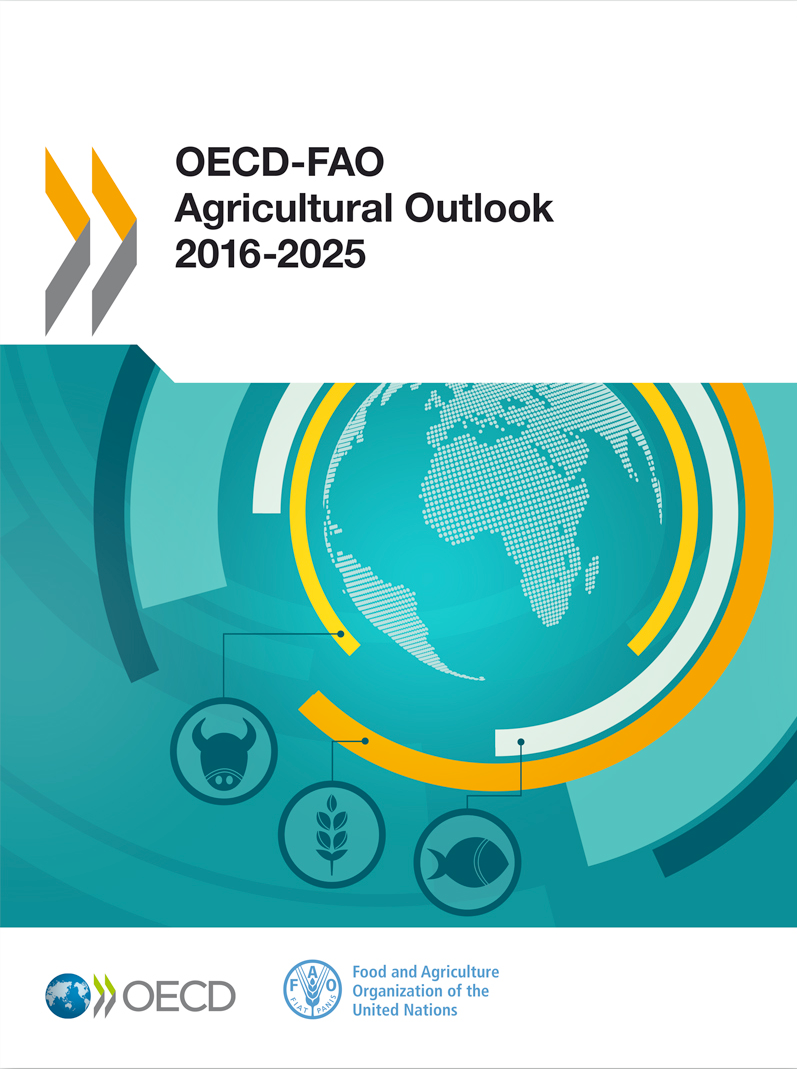
OECD-FAO Agricultural Outlook 2016-2025

OECD-FAO Agricultural Outlook 2016-2025

Special Focus: Sub-Saharian Africa

The 2016 edition of the OECD-FAO Agricultural Outlook provides an assessment of the medium-term prospects of global agriculture. The report highlights that for the sector to meet the expanding demand for food, feed and raw products for industrial uses, significant production growth is needed.

This expansion will have to take place in the face of declining land and water availability for many areas in the world, compounded by the effects of climate change. It is clear that the majority of growth will have to come from more efficiency in agricultural production, but also from improvements throughout the wider value chain.

The international community has recognised the key role of agriculture in addressing society’s goals. Agriculture is a key sector for the achievement of many goals in the 2030 Agenda for Sustainable Development, which aims to end poverty and hunger and promote prosperity and people’s wellbeing, while protecting the environment. This Outlook outlines how agriculture can actively contribute to the attainment of these goals.

IWEOECD-FAO Agricultural Outlook 2016-2025
Klimaschutz: Geht es den Deutschen ans Fleisch?

Klimaschutz: Geht es den Deutschen ans Fleisch?

Entwurf zum Klimaschutzplan 2050 empfiehlt Halbierung des Fleischkonsums

Der Entwurf zum Klimaschutzplan 2050 sorgt für Irritationen: Der Kohleausstieg ist auf eine hülsenhafte Andeutung reduziert. Immerhin wird indirekt eine Halbierung des Fleischkonsums vorgeschlagen (S. 50). Auch das stößt auf wenig Gegenliebe.

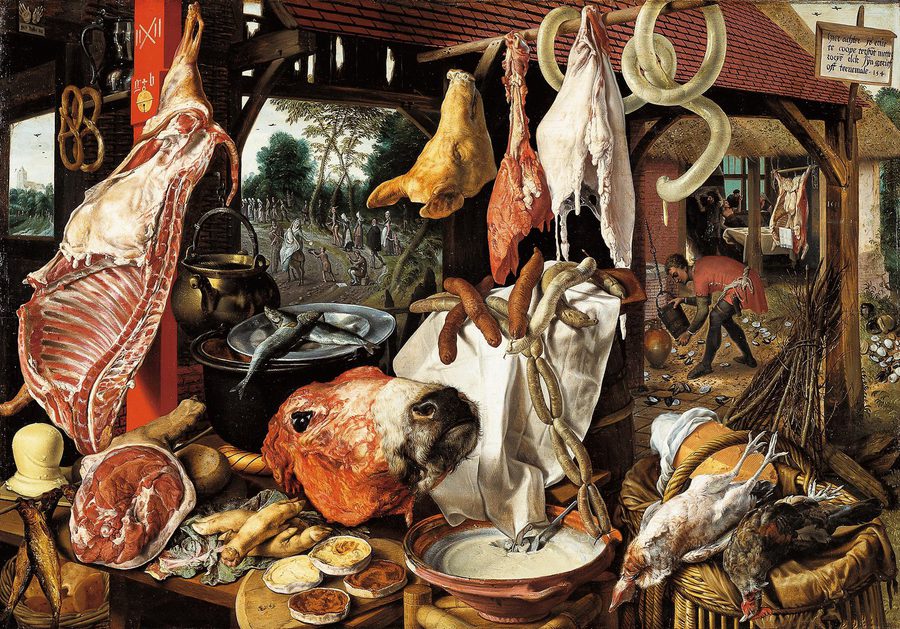
1,1 kg Fleisch pro Woche essen die Deutschen im Durchschnitt. Im Entwurf zum Klimaschutzplan 2050 wurde nun die Empfehlung der Deutschen Gesellschaft für Ernährung e. V. (DEG) als Richtlinie eingefügt: Demnach sollten nicht mehr als 300 – 600 g Fleisch und Wurst pro Woche gegessen werden – auch aus gesundheitlichen Gründen. Wie dies umgesetzt werden würde, bleibt unklar – von einer Fleischsteuer ist im Entwurf jedenfalls nicht die Rede.

Bundeslandwirtschaftsminister Christian Schmidt lehnt die Pläne ab und kontert mit einer Milchjungenrechnung: „Die Landwirtschaft mag zwar acht Prozent der Emissionen erzeugen, sie ernährt aber auch 100 Prozent der Bevölkerung.“ Vielleicht sollte Schmidt den einzigen verfügbaren Planeten, die Temperaturdifferenz von 1,5°C und die zukünftig 10 Milliarden zu ernährenden Menschen in seine Berechnungen einbeziehen. Weitere relevante Zahlen zu Emissionen durch Landwirtschaft bzw- Nutztierhaltung: Methan ist 25-fach, Lachgas 298-fach klimaschädlicher als Kohlendioxid, so das Umweltbundesamt.

Das Ziel des Klimaschutzplans 2050 des BMUB ist es, mit konkreten Maßnahmen an die international vereinbarten Ziele der Klimakonferenz 2015 in Paris anzuknüpfen, darunter in erster Linie die Begrenzung der Erderwärmung auf maximal 1,5 °C v. a. durch die Reduktion von Treibhausgasen, die zu einem gewichtigen Teil auch durch Nutztierhaltung entstehen.

IWEKlimaschutz: Geht es den Deutschen ans Fleisch?
How Does Agriculture Change Our Climate?

How Does Agriculture Change Our Climate?

All time high of GHG emissions from agriculture in 2014

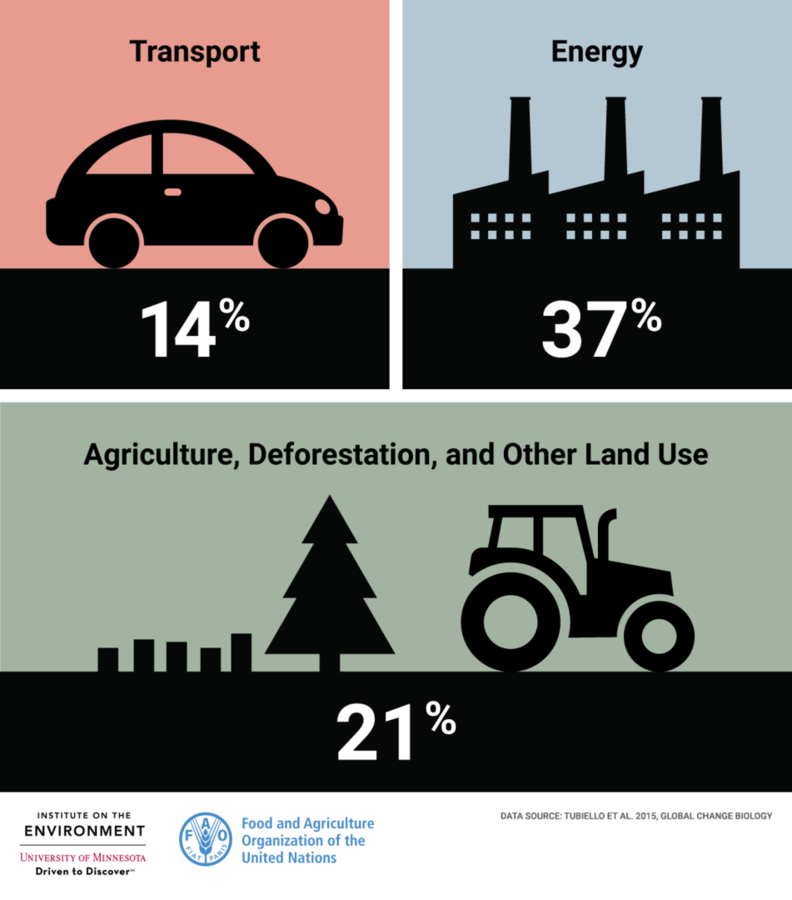
Greenhouse gas emissions from agriculture reached an all time high in 2014, at 5.25 billion tonnes of CO2 equivalents per year (Gt CO2eq yr-1). The data released by FAO (13 June 2016) in the FAOSTAT Emissions database to the year 2014, are the first to be made available to the public and scientific community. They form the base of a new collaborative report on agriculture and GHG emissions by the University of Minnesota, written together with FAO, the CGIAR system and various universities.
The new FAO data indicate that in 2014 methane and nitrous oxide emissions from crop and livestock management remain strong and may begin to grow faster than fossil fuel emissions, reversing decadal trends since the 1960s, during which fossil fuel emissions had grown several times faster than agriculture.

Emissions from agriculture represented only about 14.6% of the 2014 total carbon emissions from fossil fuels, but their growth rate compared to emissions from fossil fuels was more than double in 2014, at 1.3% annually. While global emissions from fossil fuels are expected decrease in 2015 for the first time in recent history, this is unlikely to happen for agriculture.

Historically, emissions from fossil fuels grew much faster than those in agriculture. Emissions from fossil fuels in 2014 represented a tripling of emissions since 1961, while those from agriculture nearly doubled in 2014 with respect to 1961. Since 1990 (reference year for the Kyoto Protocol) fossil fuels emissions increased by 60%, while those from agriculture grew from 1961 to 2014 by only 15%.

Thus the emissions trends observed in 2014 may represent a reversal between fossil fuels and agriculture emissions that should be monitored closely in coming years, as the world energy mix continues to decouple from carbon through increased use of renewable energy sources. By contrast, emissions from agriculture will continue to depend for many more years on crop and livestock processes with inherently higher carbon intensities.

IWEHow Does Agriculture Change Our Climate?
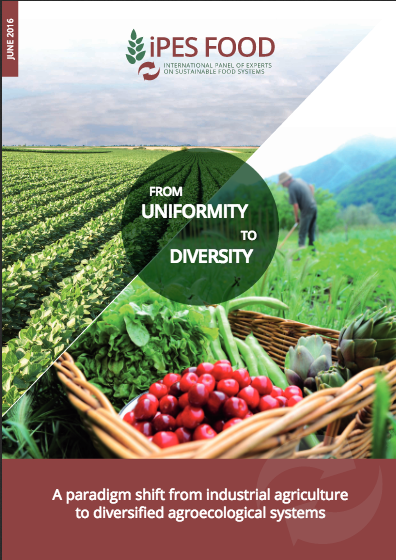
iPES FOOD: From Uniformity to Diversity

iPES FOOD: From Uniformity to Diversity

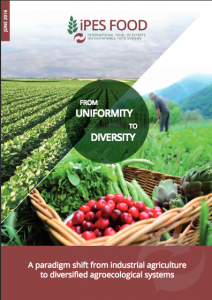
Many influential studies have helped shape our understanding of the perilous situation our food systems are in, from the degradation of ecosystems to the fragility of farmer livelihoods in many parts of the world; from the persistence of hunger and under-nutrition to the rampant growth of obesity and diet-related diseases.
However, few studies have yet to provide a comprehensive view of how alternative food systems, based around fundamentally different agricultural models, perform against the same criteria. Even fewer have mapped out the pathways of transition towards the sustainable food systems of the future.

This report explores the potential for a shift to occur from current food systems, characterized by industrial modes of agriculture, to systems based around diversified agroecological farming. It asks what the impacts on food systems would be if diversity, rather than uniformity, were the key imperative. The ecological benefits of such a shift have been widely documented. The key question, and the one asked in this report, is where the trade-offs lie.

IWEiPES FOOD: From Uniformity to Diversity
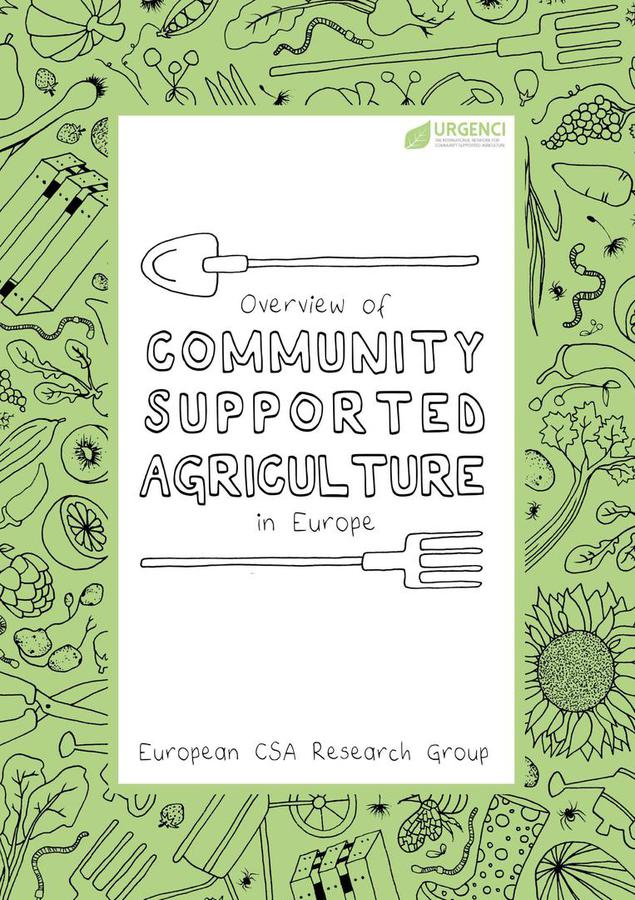
Overview: Community Supported Agriculture in Europe

Overview: Community Supported Agriculture in Europe

The Community Supported Agriculture (CSA, German: Solidarische Landwirtschaft) movement is being increasingly recognized for offering an alternative to the unsustainable industrial food system and thus as a concrete approach in the transition towards agroecology and food sovereignty.

In the “European CSA Overview”, the European CSA Research Group combines the knowledge of actors from 22 European countries. All these actors are from the interface of research and farming and have an intimate knowledge of CSAs in their respective countries. The Report thus gives an insiders’ perspective on the state and the dynamics of the CSA movement in the continent. With this Report, the European CSA Research Group aims to improve knowledge generation and sharing amongst CSAs in Europe and to create awareness among policy makers and the wider public that functioning alternatives to industrial food dependency exist.

Apart from presenting the results of a Europe wide census, this report analyses the agro-ecological dimension of CSA practice.

IWEOverview: Community Supported Agriculture in Europe
Growing Imbalance Will Cause Higher Food Prices

Growing Imbalance Will Cause Higher Food Prices

Report: How food prices link environmental constraints to sovereign credit risk

The UNEP-Global Footprint Network report, entitled ERISC Phase II: How food prices link environmental constraints to sovereign credit risk, features a table that ranks countries according to how badly they will be affected if global food commodity prices double.

In the future, the world will likely suffer from higher and more volatile food prices as a result of a growing imbalance between the supply and demand of food, the report notes. Rising populations and incomes will intensify the demand for food while climate change and resource scarcity will disrupt food production.

The report, which was published in collaboration with Cambridge Econometrics and several leading financial institutions, models the impact of a global food price shock on 110 countries to assess which countries face the greatest economic risk from this growing imbalance.

In terms of the highest percentage loss to GDP, the five countries that will be worst hit if food commodity prices double are all in Africa – Benin, Nigeria, Cote d’Ivoire, Senegal and Ghana. But China will see the most amount of money wiped from its GDP of any country – $161 billion, equivalent to the total GDP of New Zealand. India will see the second highest loss to GDP – $49 billion, equivalent to the total GDP of Croatia.

Among the report’s other key findings are:

  • Overall, Egypt, Morocco and Philippines could suffer the most from a doubling of food prices in terms of the combined impact on GDP, current account balance and inflation.
  • 17 out of the 20 countries most at risk from a food price shock are in Africa.
  • Paraguay, Uruguay, Brazil, Australia, Canada and the US would benefit the most from a sharp increase in food commodity prices.
  • Globally, negative effects of a food price shock massively outweigh positive effects in absolute terms. While China could see an absolute reduction in GDP of $161 billion, the highest absolute positive effect on GDP, seen in the United States, is only $3 billion –50 times smaller than the impact on China.
  • In 23 countries, a doubling in food prices leads to a 10 per cent (or more) rise in the consumer price index.
  • Countries with higher sovereign credit ratings tend to be less exposed to risks resulting from a food price spike.
  • Countries whose populations have the highest consumption of natural resources and services, and are therefore most responsible for the environmental constraints that make future food prices higher and more volatile, tend to face the lowest risk exposure.

The report builds on the first Environment Risk Integration in Sovereign Credit (ERISC) report published in 2012 by UNEP FI and GFN.

The overall objective of the ERISC project is to assesses how environmental risks such as deforestation, climate change and water scarcity affect economies, given that GDP, inflation and current account balances underpin some of the criteria that determine a country’s sovereign credit rating and the cost of borrowing on international capital markets.

IWEGrowing Imbalance Will Cause Higher Food Prices
Conflictfood: Lebensmittel aus Konfliktregionen

Conflictfood: Lebensmittel aus Konfliktregionen

Gewinner des Next Organic Start-Up Awards 2016

Essen ist in vielerlei Hinsicht politisch. Salem El-Mogaddedi hat dieser Idee einen weiteren wesentlichen Aspekt hinzugefügt, als er 2015 gemeinsam mit Gernot Würtenberger Conflictfood gründete.

Sie reisen persönlich in Krisen- und Konfliktregionen, um vor Ort landestypische Agrarprodukte zu finden und einen fairen direkten Handel mit Kleinbauern und -bäuerinnen zu betreiben. So wird den Menschen vor Ort langfristig eine Perspektive geschaffen, lokale Strukturen gestärkt und Fluchtursachen an der Wurzel bekämpft.

Kleinen Kooperativen kaufen sie Gewürze, Öle und Trockenfrüchte direkt ab und bingen sie nach Berlin, so zum Beispiel aufwendig gewonnenen Safran. In Berlin werden die Produkte in einer Werkstatt von Menschen mit Behinderung abgefüllt und für den Versand und Verkauf vorbereitet. Informationen über Länder und Konflikte liegen den Produkten in Form eines Booklets bei. Beim Kauf jedes Produktes geht 1€ an eine Bildungseinrichtung des Herkunftslandes. Die Bildungseinrichtungen werden besucht und der Geldfluss transparent dokumentiert.

Die Geschichten rund um die Produkte, ihre Herkunft und die Menschen dahinter werden auf einem Blog eindrücklich dokumentiert, so zum Beispiel die Geschichte der Frauen-Vereinigung in Shakiban.

IWEConflictfood: Lebensmittel aus Konfliktregionen