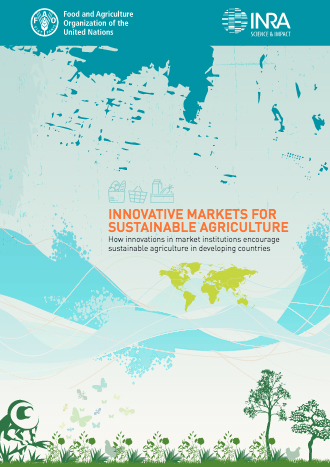
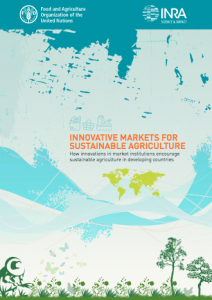
 Abstract: Between 2013 and 2015, the Food and Agriculture Organization of the United Nations (FAO) and the French National Institute for Agricultural Research (INRA) undertook a survey of innovative approaches that enable markets to act as incentives in the transition towards sustainable agriculture in developing countries. Through a competitive selection process, 15 cases from around the world provide insights into how small-scale initiatives that use sustainable production practices are supported by market demand, and create innovations in the institutions that govern sustainable practices and market exchanges.
These cases respond to both local and distant consumers’ concerns about the quality of the food that they eat. The book evidences that the initiatives rely upon social values (e.g. trustworthiness, health [nutrition and food safety], food sovereignty, promotion of youth and rural development, farmer and community livelihoods) to adapt sustainable practices to local contexts, while creating new market outlets for food products. Specifically, private sector and civil society actors are leading partnerships with the public sector to build market infrastructure, integrate sustainable agriculture into private and public education and extension programmes, and ensure the exchange of transparent information about market opportunities.
The results are: (i) system innovations that allow new rules for marketing and assuring the sustainable qualities of products; (ii) new forms of organization that permit actors to play multiple roles in the food system (e.g. farmer and auditor, farmer and researcher, consumer and auditor, consumer and intermediary); (iii) new forms of market exchange, such as box schemes, university kiosks, public procurement or systems of seed exchanges; and (iv) new technologies for sustainable agriculture (e.g. effective micro-organisms, biopesticides and soil analysis techniques). The public sector plays a key role in providing legitimate political and physical spaces for multiple actors to jointly create and share sustainable agricultural knowledge, practices and products.
Download PDF here.
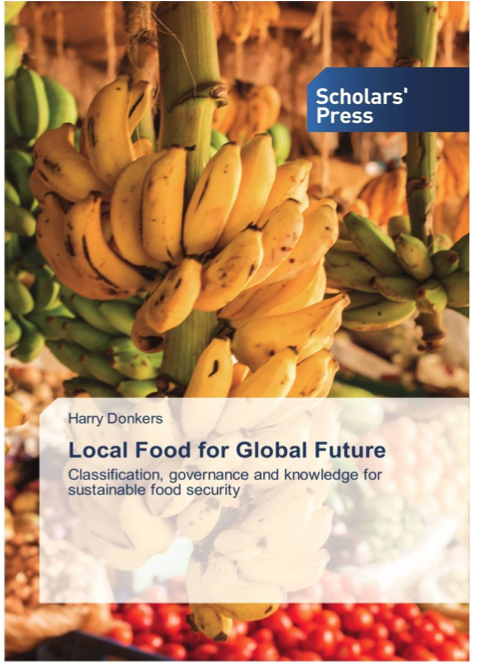
 A critical analysis of the post World-War II industrial agriculture and food system showed a number of drawbacks. To overcome these difficulties a new paradigm is needed: sustainable food security that requires a focus on local resources. Starting from recently published articles and new research the book „Local Food for Global Future“ by Dr. Harry Donkers presents a structured approach, which offers opportunities and challenges for local and regional food systems, that we se re-emerging globally.
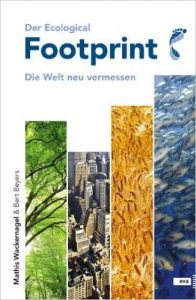 Am 08. August ist es leider schon wieder so weit: Der globale Erdüberlastingstag, Earth Overshoot Day für das Jahr 2016 ist erreicht, d. h. die natürlichen Ressourcen für das jahr sind aufgebraucht, alles was wir danach angreifen, geht zu Lasten der Natur und der Zukunft: Wir leben auf Pump.
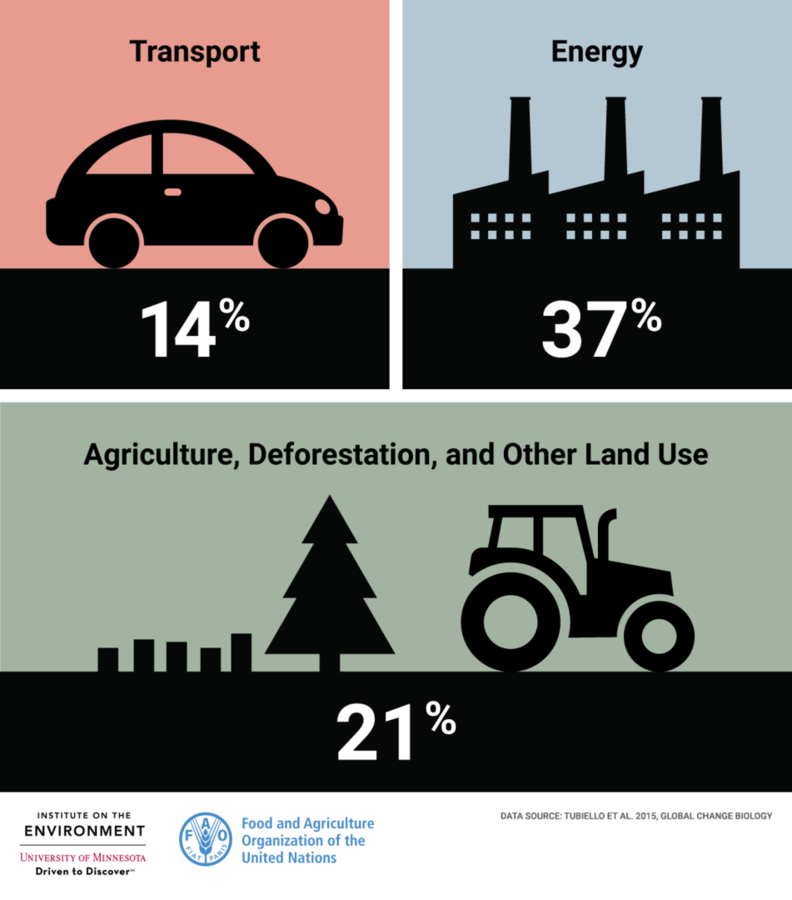
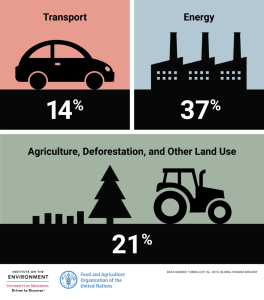 Greenhouse gas emissions from agriculture reached an all time high in 2014, at 5.25 billion tonnes of CO2 equivalents per year (Gt CO2eq yr-1). The data released by FAO (13 June 2016) in the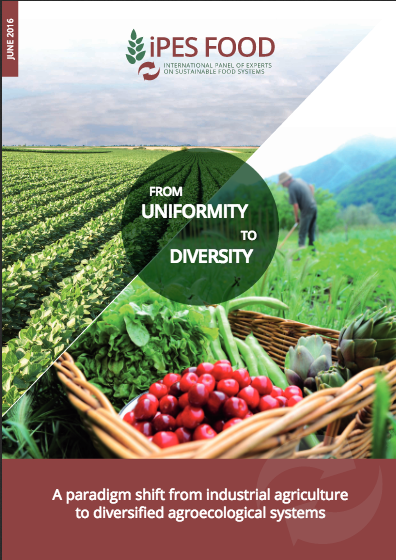
 Many influential studies have helped shape our understanding of the perilous situation our food systems are in, from the degradation of ecosystems to the fragility of farmer livelihoods in many parts of the world; from the persistence of hunger and under-nutrition to the rampant growth of obesity and diet-related diseases.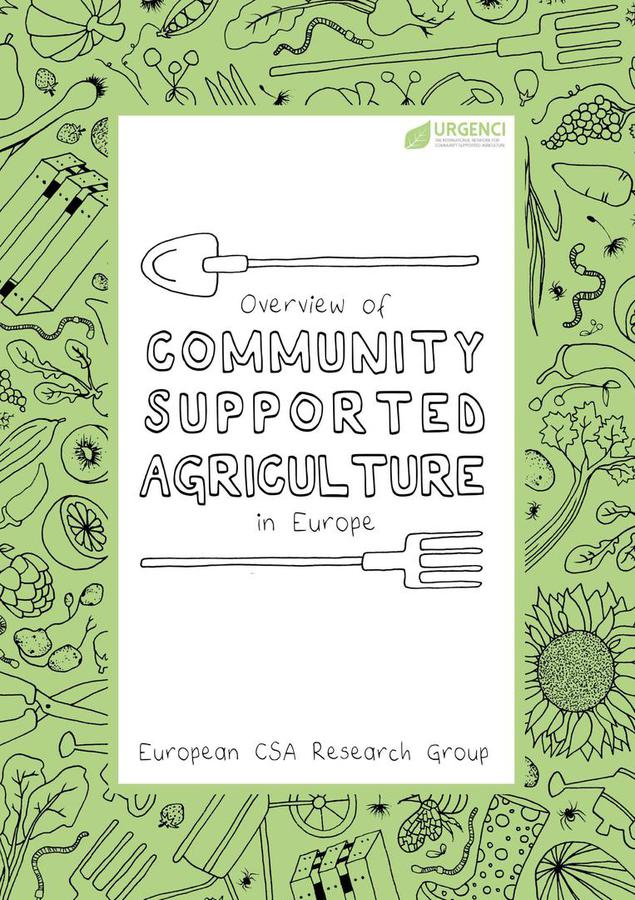
 The Community Supported Agriculture (CSA, German: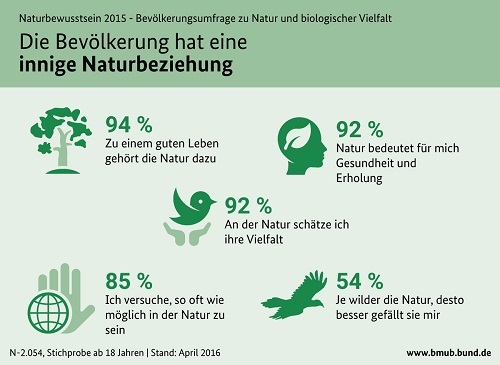
 Eine große Mehrheit der Deutschen wünscht sich strengere Regeln und Gesetze für die Landwirtschaft. Landwirte sollen mehr Rücksicht auf Natur und Tierwohl nehmen. Den Einsatz von Genpflanzen lehnen die Deutschen klar ab. Das sind einige Ergebnisse der neuen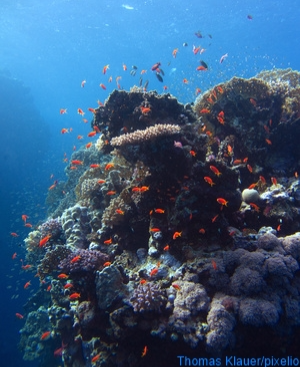
 European researchers have found substantially different climate change impacts for a global warming of 1.5°C and 2°C by 2100, the two temperature limits included in the Paris climate agreement. The additional 0.5°C would mean a 10-cm-higher global sea-level rise by 2100, longer heat waves, and would result in virtually all tropical coral reefs being at risk. The research,