iPES FOOD: From Uniformity to Diversity

iPES FOOD: From Uniformity to Diversity

Many influential studies have helped shape our understanding of the perilous situation our food systems are in, from the degradation of ecosystems to the fragility of farmer livelihoods in many parts of the world; from the persistence of hunger and under-nutrition to the rampant growth of obesity and diet-related diseases.

However, few studies have yet to provide a comprehensive view of how alternative food systems, based around fundamentally different agricultural models, perform against the same criteria. Even fewer have mapped out the pathways of transition towards the sustainable food systems of the future.

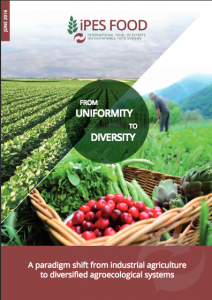
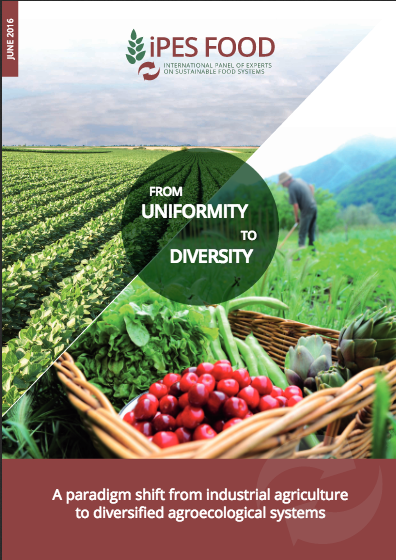
This report explores the potential for a shift to occur from current food systems, characterized by industrial modes of agriculture, to systems based around diversified agroecological farming. It asks what the impacts on food systems would be if diversity, rather than uniformity, were the key imperative. The ecological benefits of such a shift have been widely documented. The key question, and the one asked in this report, is where the trade-offs lie.

IWEiPES FOOD: From Uniformity to Diversity
Overview: Community Supported Agriculture in Europe

Overview: Community Supported Agriculture in Europe

The Community Supported Agriculture (CSA, German: Solidarische Landwirtschaft) movement is being increasingly recognized for offering an alternative to the unsustainable industrial food system and thus as a concrete approach in the transition towards agroecology and food sovereignty.

In the “European CSA Overview”, the European CSA Research Group combines the knowledge of actors from 22 European countries. All these actors are from the interface of research and farming and have an intimate knowledge of CSAs in their respective countries. The Report thus gives an insiders’ perspective on the state and the dynamics of the CSA movement in the continent. With this Report, the European CSA Research Group aims to improve knowledge generation and sharing amongst CSAs in Europe and to create awareness among policy makers and the wider public that functioning alternatives to industrial food dependency exist.

Apart from presenting the results of a Europe wide census, this report analyses the agro-ecological dimension of CSA practice.

IWEOverview: Community Supported Agriculture in Europe
Lobbyregister: Demokratie braucht Fairness und Transparenz

Lobbyregister: Demokratie braucht Fairness und Transparenz

Campact

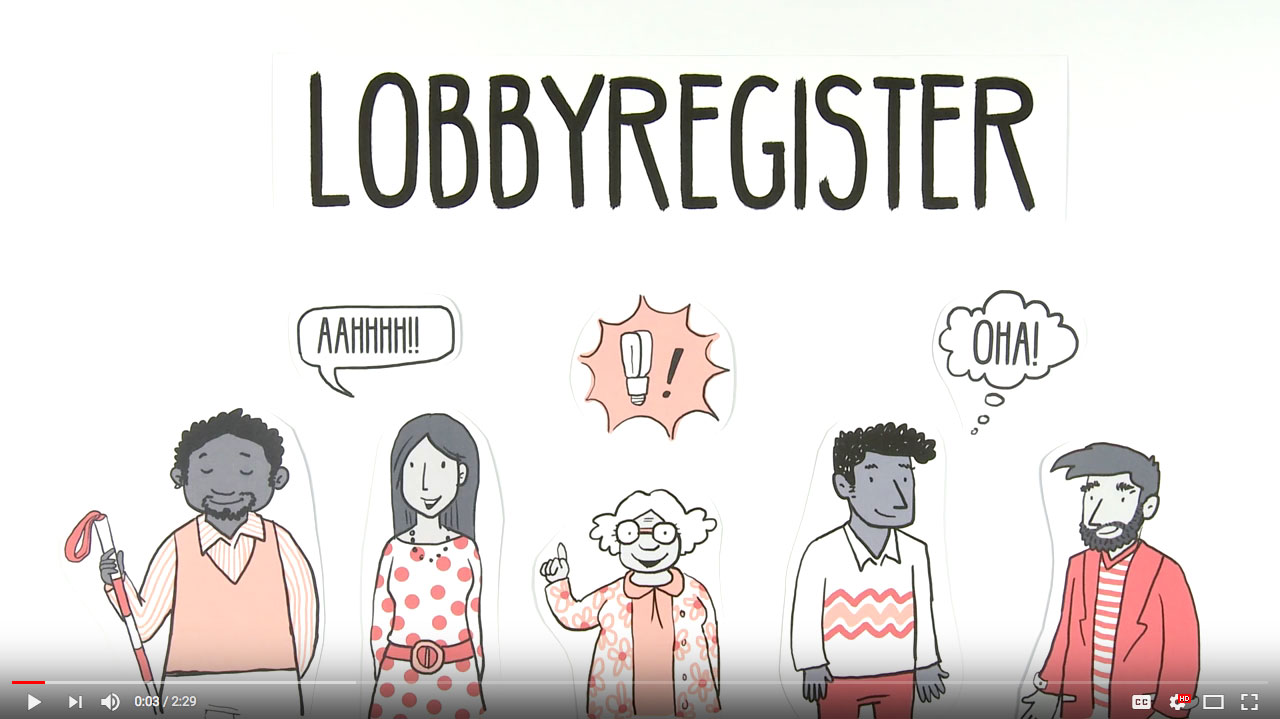
Transparenz ist Voraussetzung für eine lebendige Demokratie. Deshalb haben BürgerInnen das Recht zu wissen, wer bei politischen Entscheidungen mitmischt. Doch CDU und CSU blockieren klare Regeln für Lobbyisten. Dieser Film erklärt in 150 Sekunden, was ein Lobbyregister ist – und warum wir es brauchen. (Via Campact.)


IWELobbyregister: Demokratie braucht Fairness und Transparenz
Deutsche wollen strengere Regeln für die Landwirtschaft

Deutsche wollen strengere Regeln für die Landwirtschaft

Naturbewusstseinsstudie

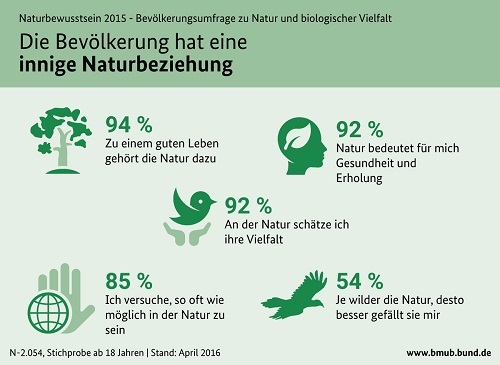
Eine große Mehrheit der Deutschen wünscht sich strengere Regeln und Gesetze für die Landwirtschaft. Landwirte sollen mehr Rücksicht auf Natur und Tierwohl nehmen. Den Einsatz von Genpflanzen lehnen die Deutschen klar ab. Das sind einige Ergebnisse der neuen Naturbewusstseinsstudie, die Bundesumweltministerin Barbara Hendricks und BfN-Präsidentin Beate Jessel Ende April in vorgestellt haben.

Hendricks: „Die Bürgerinnen und Bürger senden uns starke Signale im Bereich der Agrarpolitik. Die Deutschen wünschen sich eine Landwirtschaft, die naturverträglich ist und das Wohl der Tiere respektiert. Es gibt eine große gesellschaftliche Mehrheit für eine Agrarwende. Das bestärkt mich in meiner Forderung, das System der Agrarsubventionen vom Kopf auf die Füße zu stellen. Zahlungen an Landwirte soll es zukünftig nur bei einem gesellschaftlichen Mehrwert geben und nur bei konkreten Leistungen für die Natur. Was die Bevölkerung zu Recht nicht akzeptiert, sind gentechnisch veränderte Pflanzen.“

BfN-Präsidentin Beate Jessel: „Die Naturbewusstseinsstudie zeigt eines ganz deutlich: Die Natur spielt für die Bevölkerung eine sehr wichtige Rolle und hat für die Menschen eine hohe persönliche Bedeutung. Bemerkenswert sind jedoch die Unterschiede zwischen den Generationen und zwischen der Stadt- und Landbevölkerung. So sehen junge Menschen seltener Handlungsbedarf als ältere. Großstädter messen der Natur eine geringere Wertschätzung bei als Menschen, die in kleineren Orten leben. Diese Erkenntnisse bestärken uns in unserem Ziel, uns für eine positive Mensch-Natur-Beziehung einzusetzen, insbesondere bei der jungen Bevölkerung und den Menschen in der Stadt.“

Die aktuelle Naturbewusstseinsstudie hat zum ersten Mal detailliert die Einstellung der Deutschen zum Themenbereich Naturschutz und Landwirtschaft abgefragt. Demnach befürworten 83 Prozent der Befragten strengere Regeln und Gesetze zum Schutz der Natur in der Landwirtschaft (45 Prozent „voll und ganz“/38 Prozent „eher“). 92 Prozent wünschen sich, dass Landwirtinnen und Landwirte die Auswirkungen ihres Tuns auf die Natur beachten. 93 Prozent fordern die Beachtung des Tierwohls bei der Lebensmittelproduktion. 76 Prozent halten es für wichtig, dass der Einsatz von Genpflanzen in der Landwirtschaft verboten wird.

Die Naturbewusstseinsstudie enthält zudem erstmals repräsentative Daten zum Thema „Stadtnatur“. 94 Prozent der Befragten sind der Meinung, Natur solle möglichst in allen Teilen der Stadt zugänglich sein. Die Daten zeigen, dass gerade einkommensschwache und ältere Menschen die Stadtnatur besonders häufig nutzen.

Hendricks: „Immer mehr Menschen ziehen in die Städte, wollen aber die Natur nicht missen. Stadtnatur ist auch eine Frage der sozialen Gerechtigkeit. Alle Bürgerinnen und Bürger sollen Natur in der Stadt zu Fuß erreichen können. Wir wollen darum dabei helfen, die Siedlungen grüner zu machen – mit Stadtparks und Straßenbepflanzungen, aber auch durch die Begrünung von Fassaden und Dächern oder die Förderung von ‚urban gardening‘ oder interkulturellen Gärten.“

IWEDeutsche wollen strengere Regeln für die Landwirtschaft
1.5°C vs 2°C Global Warming

1.5°C vs 2°C Global Warming

New study shows why half a degree matters

European researchers have found substantially different climate change impacts for a global warming of 1.5°C and 2°C by 2100, the two temperature limits included in the Paris climate agreement. The additional 0.5°C would mean a 10-cm-higher global sea-level rise by 2100, longer heat waves, and would result in virtually all tropical coral reefs being at risk. The research, Differential climate impacts for policy-relevant limits to global warming: the case of 1.5 °C and 2 °C, was published 21 April in Earth System Dynamics, an open access journal of the European Geosciences Union (EGU), and is presented at the EGU General Assembly.

“We found significant differences for all the impacts we considered,” says the study’s lead author Carl Schleussner, a scientific advisor at Climate Analytics in Germany. “We analysed the climate models used in the [Intergovernmental Panel on Climate Change (IPCC)] Fifth Assessment Report, focusing on the projected impacts at 1.5°C and 2°C warming at the regional level. We considered 11 different indicators including extreme weather events, water availability, crop yields, coral reef degradation and sea-level rise.”

The team, with researchers from Germany, Switzerland, Austria and the Netherlands, identified a number of hotspots around the globe where projected climate impacts at 2°C are significantly more severe than at 1.5°C. One of these is the Mediterranean region, which is already suffering from climate change-induced drying. With a global temperature increase of 1.5°C, the availability of fresh water in the region would be about 10% lower than in the late 20th century. In a 2°C world, the researchers project this reduction to double to about 20%.

In tropical regions, the half-a-degree difference in global temperature could have detrimental consequences for crop yields, particularly in Central America and West Africa. On average, local tropical maize and wheat yields would reduce twice as much at 2°C compared to a 1.5°C temperature increase.

“For heat-related extremes, the additional 0.5°C increase marks the difference between events at the upper limit of present-day natural variability and a new climate regime, particularly in tropical regions,” explains Schleussner.

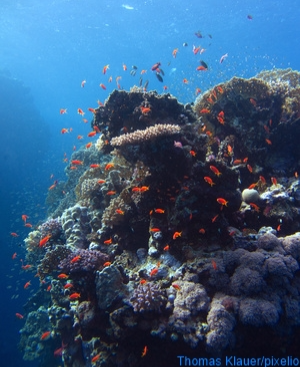
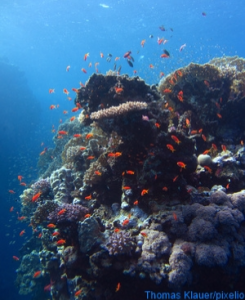
The additional warming would also affect tropical coral reefs. Limiting warming to 1.5°C would provide a window of opportunity for some tropical coral reefs to adapt to climate change. In contrast, a 2°C temperature increase by 2100 would put virtually all of these ecosystems at risk of severe degradation due to coral bleaching.

Also, “Sea level rise will slow down during the 21st century only under a 1.5°C scenario,” explains Schleussner.

Co-author Jacob Schewe, of the Potsdam Institute for Climate Impact Research in Germany, says: “Some researchers have argued that there is little difference in climate change impacts between 1.5°C and 2°C. „We clearly show that there are significant differences in impacts between 1.5°C and 2°C.”

William Hare, a senior scientist and CEO at Climate Analytics who also took part in the Earth System Dynamics research, adds: “Our study shows that tropical regions – mostly developing countries that are already highly vulnerable to climate change – face the biggest rise in impacts between 1.5°C and 2°C.”
IWE1.5°C vs 2°C Global Warming
Analysis: The Global Food System

Analysis: The Global Food System

Challenges to transition to a sustainable and resilient food system

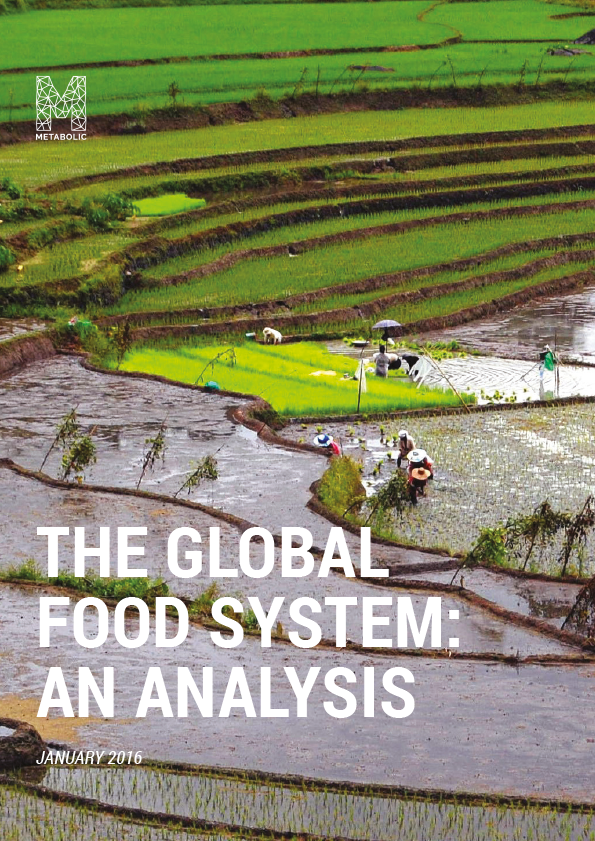
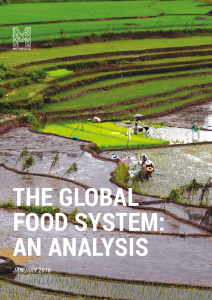
The Global Food System – An Analysis (January 2016) is a 156 pages strong study by Eva Gladek and colleagues on the current structure of the food system that lies at the center of a nexus of global problems, stretching from poverty to environmental degradation.

The study is focussing on four main challenges that need to be addressed simultaneously in order to transition to a sustainable and resilient food system: (1) Adaptive and Resilient Food System, (1) Nutritious Food For All, (3) Remaining Within Planetary Boundaries, (4) Supporting Livelihoods and Wellbeing.

From the summary: „Making food policy decisions for the global food system requires stronger and more cooperative international governance. Many impacts in the food system today can be traced back to a structural limitation of governance and enforcement.“

IWEAnalysis: The Global Food System
Tomorrow – Die Welt ist voller Lösungen

Tomorrow – Die Welt ist voller Lösungen

Dokumentarfilm zeigt innovative Projekte statt großer Probleme

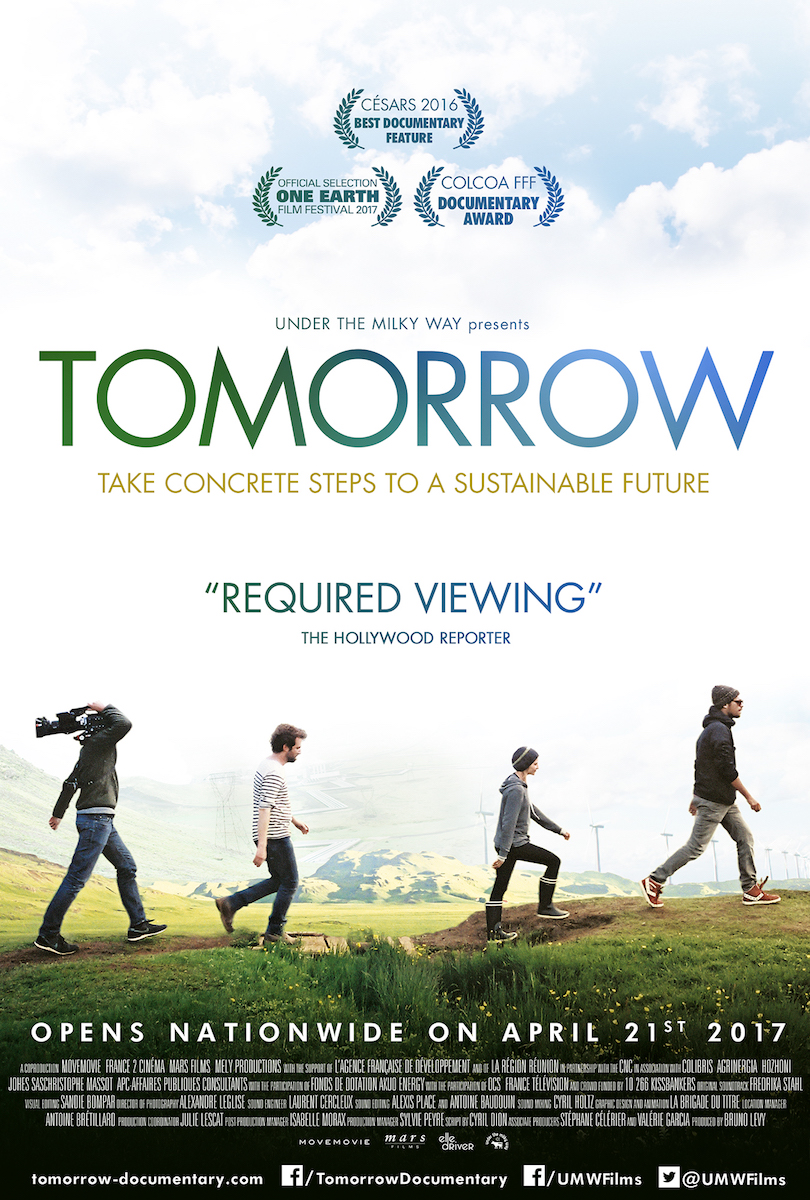
In einer Zeit, in der uns täglich düstere Hiobsbotschaften von Klimakatastrophen und Ähnlichem zu lähmen scheinen, setzt der Dokumentarfilm Tomorrow auf Lösungen. Der Aktivist Cyril Dion und die Schauspielerin Mélanie Laurent ziehen mit ihrem Filmteam los und fragen: Was, wenn es die Formel gäbe, die Welt zu retten? Was, wenn jeder von uns dazu beitragen könnte? Sie sprechen mit ExpertInnen und besuchen weltweit Projekte und Initiativen, die alternative ökologische, wirtschaftliche und demokratische Ideen verfolgen. Was sie finden, sind Antworten auf die dringendsten Fragen unserer Zeit. Und die Gewissheit, dass es eine andere Geschichte für unsere Zukunft geben kann.

Der Film wurde mit dem César als Bester Dokumentarfilm ausgezeichnet und avancierte in Frankreich bereits zum Doku-Liebling 2016. Am 29. April feiert der Film seine Berlin-Premiere im City Kino Wedding in Anwesenheit des Filmemachers und Aktivisten Cyril Dion.

Auf der Homepage zum Film finden sich neben Kinodaten auch eine Übersicht der AktivistInnen und ExpertInnen des Films sowie ein Blog zum Thema Landwirtschaft, der die Top 5 der lokalen Lösungen für eine bessere Ernährung in Deutschland vorstellt.

IWETomorrow – Die Welt ist voller Lösungen
PROteINSECT’s Final Conference

PROteINSECT’s Final Conference

Research on insects as a sustainable source of protein for animal feed

not to be picky but…

PROteINSECT is an EU funded FP7 project enabling the exploitation of insects as a sustainable source of protein for animal feed. Currently more than 80% of the protein requirements for livestock rearing in the European Union is imported from non-EU countries.

The project brought together expertise from China, Africa and Europe to encourage and enable the adoption of fly larvae protein into animal feed around the world.

The project’s research focuses on five key areas in order to evaluate insects as a novel source of protein for animal feed and wants to ensure that methodologies are sustainable and economically viable.

  • The development and optimization of fly larvae production methods for use in both developed and developing countries at small and large scale.
  • Determination of safety and quality criteria for insect protein products.
  • Evaluation of processing methodologies and the evaluation of crude and refined insect protein extracts in fish, chicken and pig feeding trials.
  • The determination of the optimal design of insect-based animal feed production systems utilising the results of a comprehensive life cycle analysis.
  • To build a pro-insect platform in Europe to encourage adoption of sustainable production technologies to include examination of the regulatory framework.

April 27, 2016, the project’s final (and sold out) conference will take place in Brussels. PROteINSECT will present its international work, findings and results to demonstrate and share the knowledge it has generated to enabling the exploitation of insects as a sustainable source of protein.

We are expecting the results with a great deal of curiosity. Especially since this project is funded under the premise that a huge amount of livestock will need to be fed in the future. But unsustainable sources of animal feed are not the only problem when it comes to present and growing meat consumption. (The project also aimed to research on insects as protein source for human nutrition in the long run but so far has focused on animal feed.)

Further readings:

IWEPROteINSECT’s Final Conference
The Land For Our Food

The Land For Our Food

A Road Movie Produced by The Access to Land Partnership

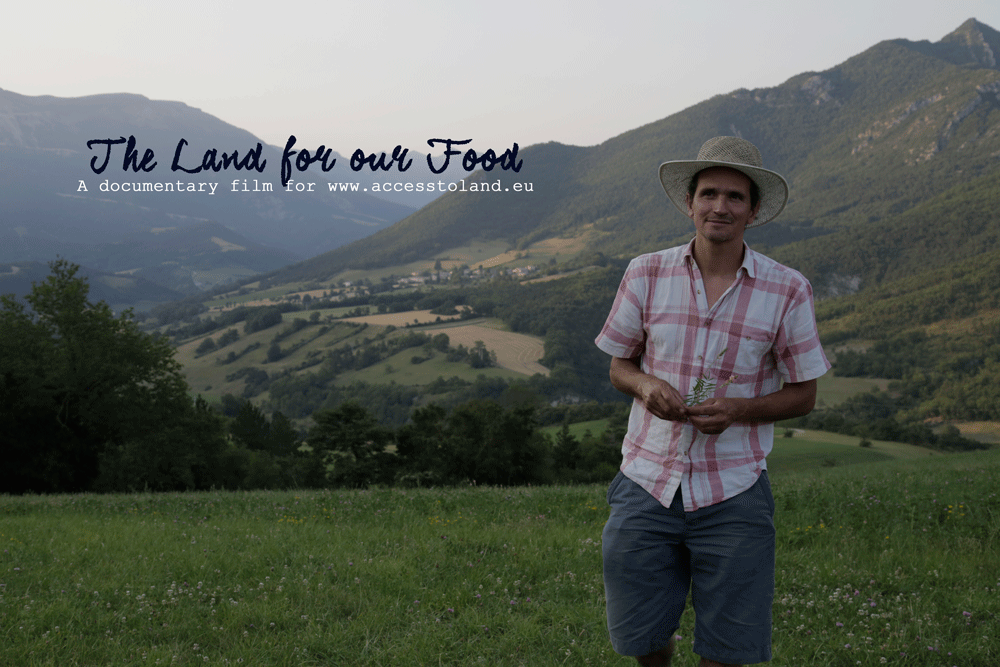
The Land For Our Food is a 34 minutes documentary movie produced by the Access to Land network and directed by Julio Molina. The video takes us on the journey of Gavin Bridger, a grower from the Community Supported Agriculture project of Farnham Local Food in England, through various European countries in his quest of accessing land for agroecological farming. The Farnham community food project is actually in search of land and Gavin discovers that this is by far an isolated problem! All over Europe the difficulty to find suitable and affordable land is posing a great barrier to the development of sustainable and often small-scale agriculture. His mentor, Rachel Harries from the Soil Association, links Gavin up to the Access to Land network and the journey is on its way.

This road-movie documentary gives us insights into the contexts and approaches of civil society initiatives from various countries in Europe regarding access to land: England, France, Spain, Italy and Romania. Gavin meets some of the initiatives from the Access to Land network, and also meets farmers and journalist George Monbiot to better understand the scope and historical roots of access to land issues. This documentary provides a very concrete introduction to access to land issues in Europe and captures a range of practical experiences in a unique way!


IWEThe Land For Our Food
Saatgut: Wer die Saat hat, hat das Sagen

Saatgut: Wer die Saat hat, hat das Sagen

Buch von Anja Banzhaf

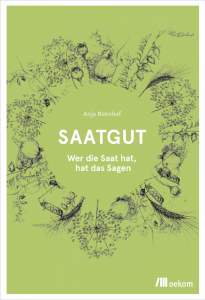
„Wer die Saat hat, hat das Sagen.“ Das Sprichwort bringt es auf den Punkt: Wer unser Saatgut kontrolliert, kontrolliert die gesamte Nahrungs-mittelkette. Die Agrarindustrie versucht weltweit die Kontrolle über die Saat zu übernehmen. Doch vielerorts kämpfen Bäuerinnen und Gärtner dafür, über ihr Saatgut und ihre Art der Landwirtschaft selbst zu bestim-men. Welche Wege Samengärtner, Züchter und Aktivistinnen finden, um die Sortenvielfalt zu erhalten, schildert dieses liebevoll gestaltete Buch.

IWESaatgut: Wer die Saat hat, hat das Sagen