
Investoren erwerben häufig Flächenanteile in Ostdeutschland

Investoren erwerben häufig Flächenanteile in Ostdeutschland

Neuer Thünen-Report zu Kapitaleigentümern in ostdeutschen Agrarunternehmen

Wie das Thünen-Institut für ländliche Räume berichtet und mit einer neuen Studie belegt, erwerben überregional tätige Investoren häufig Anteile und damit Flächen von landwirtschaftlichen Unternehmen in Ostdeutschland.

Andreas Tietz, Autor der Studie Überregional aktive Kapitaleigentümer in ostdeutschen Agrarunternehmen: Bestandsaufnahme und Entwicklung, schätzt, dass gut ein Fünftel der Flächenverkäufe in Ostdeutschland auf diese Weise erfolgt. Diese Transaktionen laufen an den zuständigen staatlichen Stellen vorbei, weil Anteilsverkäufe – anders als der Transfer landwirtschaftlicher Flächen – nicht behördlich genehmigt werden müssen.
Laut Studie kommt diese Form des überregionalen Anteilerwerbs vor allem in Mecklenburg-Vorpommern vor.

„Rund 34 % der von juristischen Personen bewirtschafteten Landwirtschaftsfläche in den zwei dort untersuchten Landkreisen gehören demnach zu Unternehmen, die sich im Mehrheitseigentum von nicht ortsansässigen Personen befinden. Knapp die Hälfte entfällt davon auf landwirtschaftsnahe Investoren, die andere Hälfte auf nichtlandwirtschaftliche Investoren aus unterschiedlichen Wirtschaftsbereichen.“ so die Zeitschrift Agra-Europe (AgE).

Tiez: „Diese staatlich nicht kontrollierten Grundstücksübertragungen erreichen somit beträchtliche Ausmaße, die Anlass geben können, die Legitimität des landwirtschaftlichen Bodenrechts insgesamt in Frage zu stellen.“
IWEInvestoren erwerben häufig Flächenanteile in Ostdeutschland
FAO: Food for Cities Program

FAO: Food for Cities Program

Building sustainable and resilient city region food systems

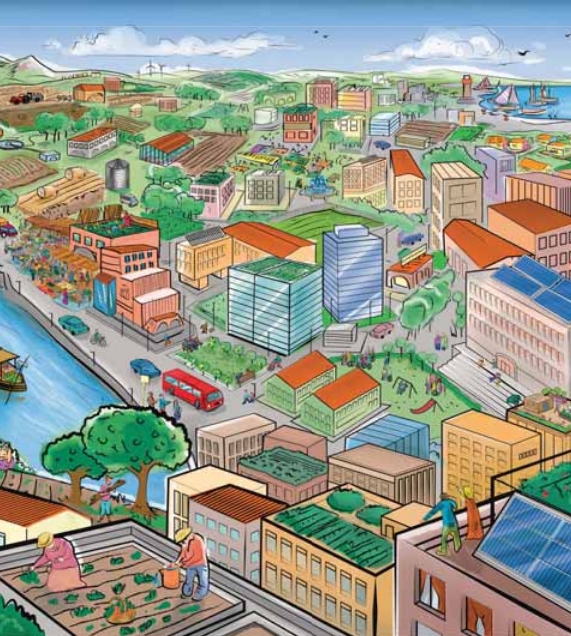
A city region food system approach recognizes that there is great diversity between contexts, the nature of urbanisation, sizes of urban centres (from small and intermediate towns to megacities), types of food systems, and nature of ties with the surrounding countryside and rural populations. It is a cross-sectoral, multi-level, multi-dimensional and multi-stakeholder approach.

In an urbanizing world, dynamic food systems are affected by changes in social, physical and ecological factors. Food insecurity and malnutrition concerns need to be addressed in urban areas as much as in rural areas. City region food systems encompass the complex network of actors, processes and relationships involved in food production, processing, marketing and consumption in a given geographical region. A flow of people, goods and ecosystem services exists across this regional landscape. This rural-urban continuum fosters interdependence of rural and urban economies.

IWEFAO: Food for Cities Program
Wenn ein Garten wächst

Wenn ein Garten wächst

Der Kinodokumentarfilm Wenn ein Garten wächst erzählt vom heiteren Abenteuer einer Gruppe Nachbarn in Kassel, die ohne besondere Vorkenntnisse eine fade, städtische Rasenfläche in eine öffentliche Gartenoase mitten in der Stadt verwandelt. Doch trifft das grüne Treiben nicht auf behördliche Zustimmung. Die Erhaltung des Gartens wird zum Kraftakt.


IWEWenn ein Garten wächst
The Value of Soil

The Value of Soil

Land degradation and desertification threaten fertile land and the benefits human society derives from it throughout the world.The consequences are alarming: food insecurity, poverty, reduced availability of clean water, and increased vulnerability of affected areas to climate change. The Value of Soil was produced and first published by the Economics of Land Degradation (ELD).


IWEThe Value of Soil
Dokumentarfilm: AGROKALYPSE

Dokumentarfilm: AGROKALYPSE

Der Tag an dem das Gensoja kam

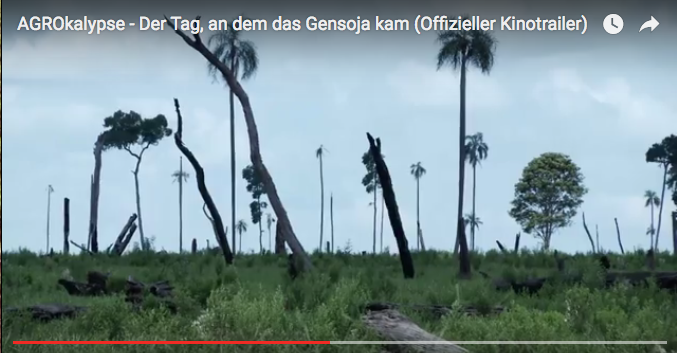
In seinem Dokumentarfilm AGROKALYPSE – Der Tag, an dem das Gensoja kam“ erzählt der Regisseur Marco Keller die Geschichte der brasilianischen Ureinwohner vor dem Hintergrund des weltweiten steigenden Fleischkonsums und zeigt, wie wir mit Lebensmitteln die Welt verändern.

Die Urwaldlandschaft Brasiliens ist Schauplatz einer vom Mensch gemachten Tragödie. Dieses einzigartige, für uns alle lebenswichtige Ökosystem, wird Tag für Tag durch Sojafarmer zerstört. Bis zu 12 kg Soja oder Getreide muss man verfüttern, um daraus 1 kg Fleisch zu gewinnen. Und um den weltweit steigenden Fleischkonsum zu decken, wird dementsprechend immer mehr Futtermittel, meist Gensoja, angebaut. Aber was für Konsequenzen hat dieser rasant wachsende Agrarsektor und der enorme Fleischkonsum der westlichen Welt?

Mehr Informationen über den Film und aktuelle Termine finden Sie hier.


IWEDokumentarfilm: AGROKALYPSE
The MEATRIX®

The MEATRIX®

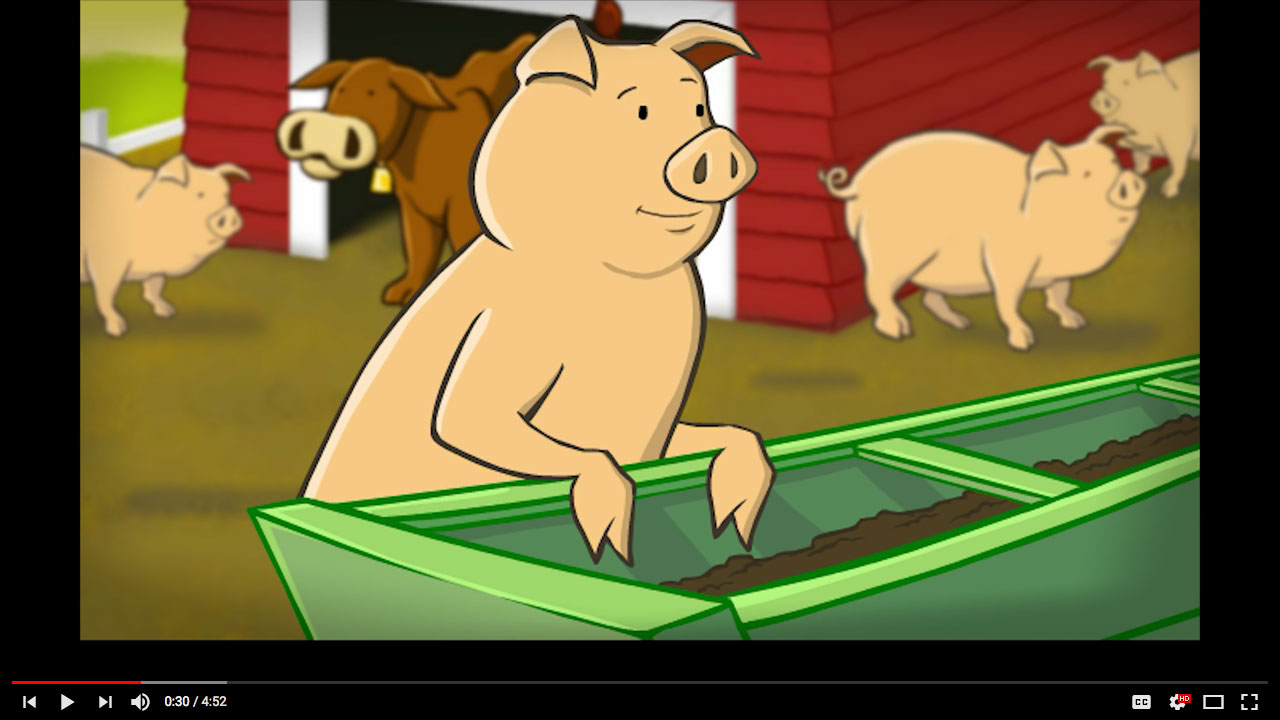
Take the red pill and watch the critically-acclaimed, award-winning first episode of The MEATRIX® Trilogy.


IWEThe MEATRIX®

Should we eat bugs?

by Emma Bryce

What’s tasty, abundant and high in protein? Bugs! Although less common outside the tropics, entomophagy, the practice of eating bugs, was once widespread throughout cultures. Still, today they feed about 2 billion people each day (Mmm, fried tarantulas). They also hold promise for food security and the environment. Lovely illustrated by Emma Bryce.


IWEShould we eat bugs?
NASA: Ask a Climate Scientist

NASA: Ask a Climate Scientist

NASA climate scientists provide straightforward answers to audience-submitted climate change questions. So far a playlist of videos answers qestions on CO2 and temperature, food production, global warming, extreme weather and thinning ice.

IWENASA: Ask a Climate Scientist